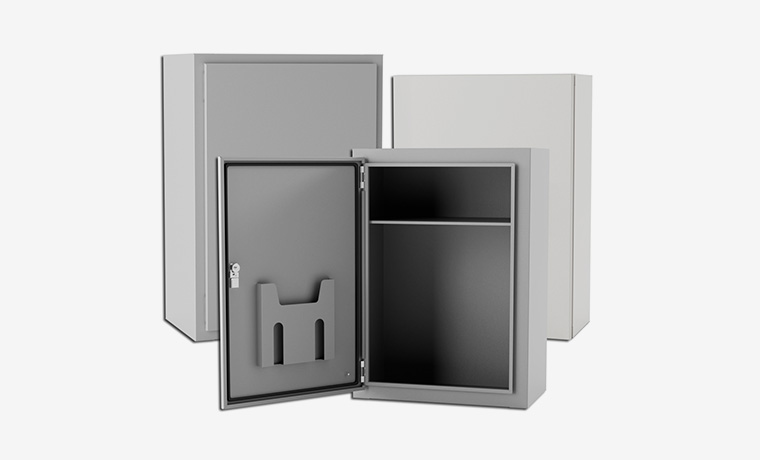
Customized according to needs, optional Material, Door & Lock etc.
Contact Us NowHome / News / Industry news
Industry news
Jul 07,2026
By:Shinging
This is a serious question. Every restaurant owner must answer it. Kitchen managers also need to answer it. Health inspectors will check your equipment. They will check your storage areas. They will check every cabinet in the kitchen. If your restaurant equipment cabinet enclosure does not meet health codes, you can fail the inspection. You can get fines. You can even get shut down. So this question matters a lot. It matters for your business. It matters for your customers' safety. It also matters for your staff. But many restaurant owners do not know what the health codes require. They do not know what makes a cabinet compliant. This article explains it clearly.
Health codes are not optional
Health codes are rules. They come from local and state governments. In the USA, the FDA Food Code is the main guide. Many states follow it closely. These rules are about food safety. They are about preventing contamination. They are also about keeping the kitchen clean and safe. The rules cover many things. They cover food storage and preparation. They also cover the equipment and cabinets. A restaurant equipment cabinet enclosure must meet certain standards. It must be made of safe materials. It must be easy to clean. It must not harbor bacteria. It must also protect the electrical parts inside. So meeting health codes is not just about passing an inspection. It is about running a safe and responsible kitchen.
What do health codes require for a restaurant equipment cabinet enclosure?
The health codes have several requirements. Here are the main ones.
1. The material must be food‑safe and corrosion‑resistant
The cabinet must be made of a suitable material. Stainless steel is the most common choice. It is strong and durable. It does not rust or corrode. It does not react with food acids. It is also non‑porous. This means it does not absorb liquids or dirt. Health codes often require stainless steel or an approved equivalent. The surface must be smooth and cleanable. Rough surfaces can trap bacteria. They can also be hard to sanitize. So the material choice is very important.
2. The design must have no gaps or crevices
Health codes require the cabinet to be easy to clean. This means the design must be simple. There must be no sharp corners. There must be no hidden gaps. Bacteria and dirt can hide in gaps. They can grow there. They can spread to the food. So the cabinet must have sealed joints. Welding is the best method. The welds must be continuous and smooth. They must not have cracks. All edges must be rounded. Rounded edges are easier to wipe down. They also do not collect grime. A well‑designed cabinet makes cleaning fast and effective.
3. The cabinet must be easy to sanitize
Cleaning is not enough. The cabinet must also be sanitized. This means using chemicals or heat to kill germs. The surface must handle this well. It must not get damaged by sanitizers. Stainless steel is very good for this. It resists strong chemicals. It does not stain or corrode. The cabinet must also have no absorbent parts. Wood and some plastics are not allowed. They can soak up liquids. They can harbor germs. So all parts must be non‑absorbent. This is a key health code requirement.
4. The cabinet must protect against rust and corrosion
Rust is a big problem in kitchens. There is a lot of moisture. There is steam from cooking. There is water from cleaning. If the cabinet rusts, it is not safe. Rust flakes can fall into food. Rust can also damage the electrical parts. So health codes require rust‑proof materials. Stainless steel is the best solution. It does not rust. It stays clean and strong. Even with daily washing, it looks good. So a rust‑proof cabinet is a compliant cabinet.
5. The cabinet must have proper sealing against moisture
Moisture is everywhere in a kitchen. The cabinet must keep it out. This protects the electrical parts inside. It also prevents mold and mildew. The doors must close tightly. They must have gaskets or seals. The seals must be food‑grade. They must not absorb moisture. They must also be easy to clean. The cable entry points also need seals. Water cannot enter through these holes. A sealed cabinet is a sanitary cabinet.
6. The cabinet must support easy maintenance
Health codes expect the kitchen to be well‑maintained. This includes the cabinets. The cabinet must be designed for easy maintenance. Staff must be able to inspect all parts. They must be able to clean every surface. They must also be able to replace parts if needed. Hinges and handles must be sturdy. They must also be removable for cleaning. Good design makes maintenance simple. This helps the kitchen stay compliant.
7. The electrical parts must be protected
Many restaurant equipment cabinet enclosures hold electrical parts. They hold switches, controllers, and wiring. These parts must be protected. They must not get wet. They must not get greasy. Health codes require electrical safety too. The cabinet must have proper grounding. It must also have safe cable management. Loose wires are not allowed. They can cause shorts. They can also start fires. So the enclosure must protect both the food and the staff.
8. The cabinet must be NSF certified
NSF International is a well‑known organization. It sets standards for food equipment. NSF certification means the product meets strict rules. It covers materials, design, and construction. Many health inspectors look for NSF marks. They trust this certification. So a restaurant equipment cabinet enclosure with NSF certification is easier to pass inspection. It gives the owner peace of mind.
How Shining Technology Co., Ltd. makes health‑code‑compliant restaurant equipment cabinet enclosures
Understanding health codes is one part. Building cabinets that meet all the rules is another part. That is where Shining Technology Co., Ltd. has an advantage.
Shining Technology has 17 years of experience. The company makes metal products for many industries. These include food service, medical, and industrial fields. Shining Technology is not just a parts supplier. It is a total solutions provider. The company works closely with customers. It listens to their specific needs. It can start from a simple idea or a detailed drawing. Then it builds the product step by step.
The company offers many services. These services work together to produce high‑quality enclosures.
Stainless steel manufacturing – The company uses high‑grade stainless steel. It cuts, bends, and welds the steel into complete cabinets. The welds are smooth and fully sealed.
Sheet metal fabrication – Laser cutting and precision forming give accurate dimensions. Every part fits correctly. There are no gaps or misalignments.
Metal stamping – For large production runs, stamping makes consistent parts quickly. This reduces costs and keeps quality uniform.
Electrical assembly and wiring – The company installs all electrical components inside the enclosure. They wire the systems safely. They test every circuit before delivery.
Die‑casting – This makes strong metal parts for brackets, hinges, and frames. The parts have a smooth finish and tight tolerances.
Injection molding – Plastic components like handles, seals, and insulators are made in‑house. This gives full control over material quality and design.
Because Shining Technology does all these steps under one roof, the quality is consistent. The engineering team checks each stage. They inspect incoming raw materials. They check the cutting and forming. They check the welding and grinding. They test the seals and gaskets. They verify the electrical wiring and grounding. Finally, they perform a complete functional test. This careful process ensures that every restaurant equipment cabinet enclosure meets health code requirements.
The company has worked with many food service customers. They understand the challenges of inspections and compliance. They know how to design for easy cleaning and sanitation. They also know the important NSF standards. Shining Technology delivers products that meet these high standards. The enclosures are safe, durable, and ready for any health inspection.
This is a serious question. Every restaurant owner must answer it. Kitchen managers also need to answer it. Health inspectors will check your equipmen...
Jul 07,2026 / Industry newsThis is a question every restaurant owner should ask. Kitchen managers also ask this question. Facility buyers ask it too. Commercial kitchens are tou...
Jul 07,2026 / Industry news
This is an important question for many industries. Food processing plants use these enclosures. Packing facilities use them. Commercial kitchens also ...
Jul 07,2026 / Industry newsOnline
Provider of Complete Metal Manufacturing Solutions
+86 18939857433
1188 Jiu Ye Road, Shanghai, China
11561 N Lamar Blvd,Austin,Texas,United States of America,78753
Gyeongin-ro 56-gil 8, ,3F jjbeauty,Guro-gu,Seoul,Guro-gu,Seoul,Republic of Korea
Top
Copyright © 2025 Shinging Technology Co., Ltd.,
Power By Bontop
 English
 Spanish
 Portuguese
 Arabic
 Korean
 Japanese