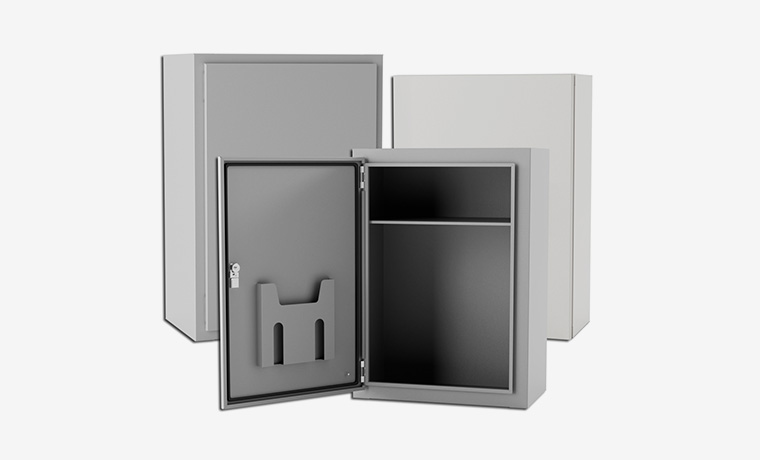
Customized according to needs, optional Material, Door & Lock etc.
Contact Us NowHome / News / Industry news
Industry news
Aug 12,2026
By:Shinging
CCTV cameras are common. You see them on buildings, streets, and parking lots. Many of these cameras are placed outside. They face rain, snow, heat, and cold. They also face strong winds and dust. So the enclosure that holds the camera must be tough. It must protect the camera from bad weather. But can a metal enclosure CCTV really survive these harsh conditions? The answer is yes, but only if it is built well. Let us look at what it takes.
Extreme weather is a real test
Outdoor cameras deal with many weather problems. Summer heat can go over 40°C. Winter cold can drop below -20°C. Rain and snow bring moisture. Strong winds carry dust and sand. Sunlight causes fading and heat buildup. Each of these can damage a camera. The enclosure must handle all of them.
Material choice is the first step
The material decides how long the metal enclosure CCTV lasts. Stainless steel is a top choice. It is strong and does not rust easily. Grade 304 stainless steel works for most outdoor uses. Grade 316 is better for coastal areas. It has extra protection against saltwater.
Aluminum is another option. It is lighter and also resists rust. But it is not as strong as steel. For extreme conditions, stainless steel is often the better pick.
IP rating shows protection level
The IP rating tells you how well an enclosure stops water and dust. IP66 is a common rating for outdoor cameras. It means the metal enclosure CCTV stops dust completely. It also handles strong water jets. For very wet areas, IP67 is better. It allows for short submersion in water. IP68 is the highest. It works for long submersion.
Always check the IP rating. A high rating gives better protection against rain and moisture.
Temperature range matters
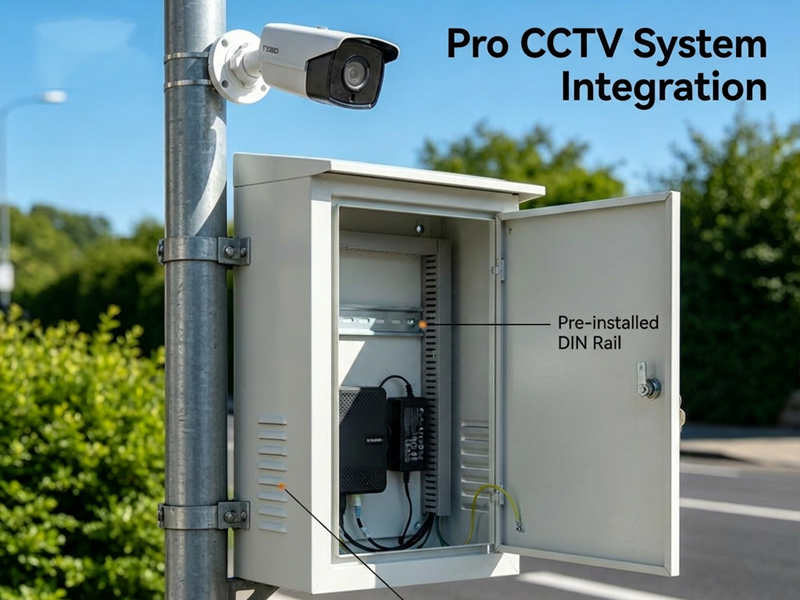
Extreme heat or cold can harm the camera. The metal enclosure CCTV must handle temperature changes. Good ventilation helps with heat. Vents let hot air escape. Some enclosures have fans or heat sinks.
For cold weather, the metal enclosure CCTV needs a heater. Heaters stop fog from forming on the lens. They also keep the camera working in freezing temperatures. Some enclosures have built‑in heaters. Others allow you to add them later.
Vandal resistance is also important
Outdoor cameras are easy targets. People may try to break them. The enclosure must resist impacts. The IK rating measures impact resistance. IK10 is the highest rating. It means the enclosure can take a strong hit. A camera with an IK10 metal enclosure CCTV survives most attacks.
Thicker metal gives better protection. Reinforced corners also help. Tamper‑proof screws make it hard to remove the camera.
Sun protection helps
Direct sunlight heats up the enclosure. This can overheat the camera. A light‑colored or reflective surface helps. It reflects sunlight and keeps the inside cooler. Some enclosures have sun shields. These attach to the top of the enclosure. They block direct sunlight and reduce heat buildup.
Sealing keeps water out
Water is the biggest enemy of outdoor electronics. The enclosure must be sealed tightly. All seams should be welded. Gaps let water inside. Cable entry points need proper seals. Cable glands are a common solution. They clamp around the cable and stop water from entering.
Rubber gaskets around the door also help. They create a watertight seal. Check these seals regularly. They wear out over time.
Corrosion resistance is key
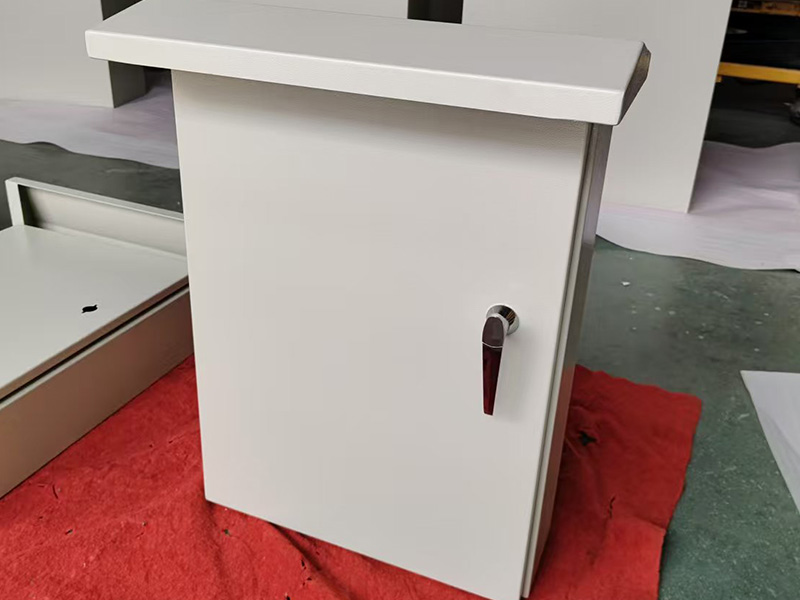
Moisture and salt cause rust. Rust weakens the enclosure. It also lets water in. Stainless steel resists corrosion well. Grade 316 is the best for coastal or industrial areas.
Powder‑coated steel is another option. The coating protects against rust. But if the coating gets scratched, rust can start. Stainless steel is more reliable for long‑term outdoor use.
Installation matters
Even the best enclosure fails if installed poorly. Mount the enclosure securely. Use strong brackets. Make sure cables are not pulled tight. Leave some slack for movement.
Position the enclosure to avoid direct water spray. Mount it under an overhang if possible. This reduces the amount of rain that hits the enclosure.
Maintenance keeps it working
Outdoor enclosures need regular checks. Clean the lens window. Check the seals. Look for signs of rust or damage. Replace worn gaskets. Test the heater and fan if present. A little maintenance helps a lot.
Choose the right manufacturer
Not all metal enclosures CCTV are made the same. The manufacturer must understand outdoor demands. They must use quality materials. They must test for weather resistance.
Shinging Technology Co., Ltd. has 17 years of experience in metal manufacturing. They provide complete solutions based on customer needs or professional drawings. Their capabilities include stainless steel manufacturing, metal stamping, sheet metal fabrication, electrical assembly, wiring, die‑casting, and injection molding. This range of skills lets them build metal enclosure CCTV systems that survive extreme weather. They can work with Grade 316 stainless steel for coastal areas. They can create tight seals against water. They can add ventilation for heat control. They can install heater brackets for cold climates.
A new compliance rule is changing how buyers source metal enclosure for access control products. Starting June 30, 2026, the U.S. Department of Defens...
Sep 21,2026 / Industry news
A new U.S. tariff rule is changing the game for Amazon sellers. On April 2, 2026, the White House signed a new order on steel, aluminum, and copper im...
Sep 21,2026 / Industry news
The outdoor micro data center enclosure market is growing very fast. It will grow from $1.68 billion in 2025 to $2.01 billion in 2026. That is a 20.1 ...
Sep 20,2026 / Industry newsOnline
Provider of Complete Metal Manufacturing Solutions
+86 18939857433
1188 Jiu Ye Road, Shanghai, China
11561 N Lamar Blvd,Austin,Texas,United States of America,78753
Gyeongin-ro 56-gil 8, ,3F jjbeauty,Guro-gu,Seoul,Guro-gu,Seoul,Republic of Korea
Top
Copyright © 2025 Shinging Technology Co., Ltd.,
Power By Bontop
 English
 Spanish
 Portuguese
 Arabic
 Korean
 Japanese