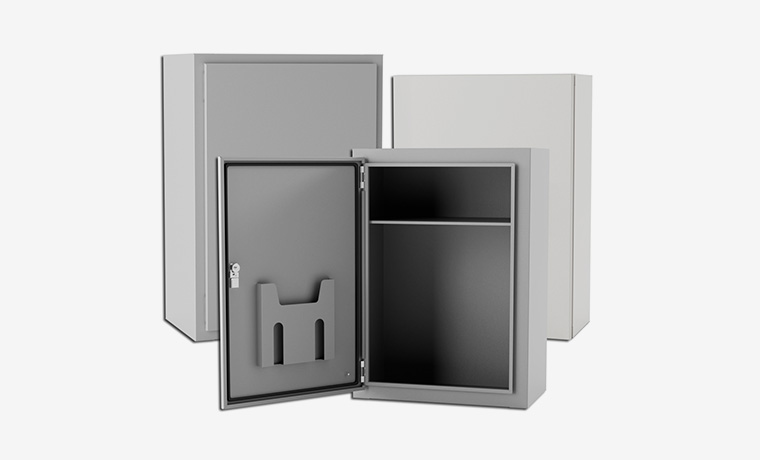
Customized according to needs, optional Material, Door & Lock etc.
Contact Us NowHome / News / Industry news
Industry news
Jul 19,2026
By:Shinging
Access control systems are changing. Many buildings now use IoT devices. IoT stands for Internet of Things. These devices connect to the internet. They send data. They receive commands. They allow remote monitoring. They also enable smart access features.
Your access control cabinet holds the main parts of the system. It has controllers. It has power supplies. It has network switches. It may have card readers and locks connected to it. All of these parts must work together. But the cabinet itself must also support IoT functions. So does your access control cabinet enclosure support IoT? Let us see what IoT requires.
IoT needs more network connections
IoT devices need data cables. They need Ethernet ports. They may use Wi‑Fi or cellular networks. A cabinet for IoT access control must have space for these connections.
The cabinet should have cable entry points. These should be easy to access. They should also be sealed against dust and water. You need room to run Ethernet cables. You need room for connectors. A good cabinet gives you this space.
IoT devices need power
More devices mean more power supplies. IoT controllers need power. Sensors need power. Network switches need power. Your cabinet must have enough outlets. It must have room for power distribution units.
Cable management becomes more important. You must separate power cables from data cables. This reduces interference. A well‑designed cabinet has built‑in channels. These keep cables organized and safe.
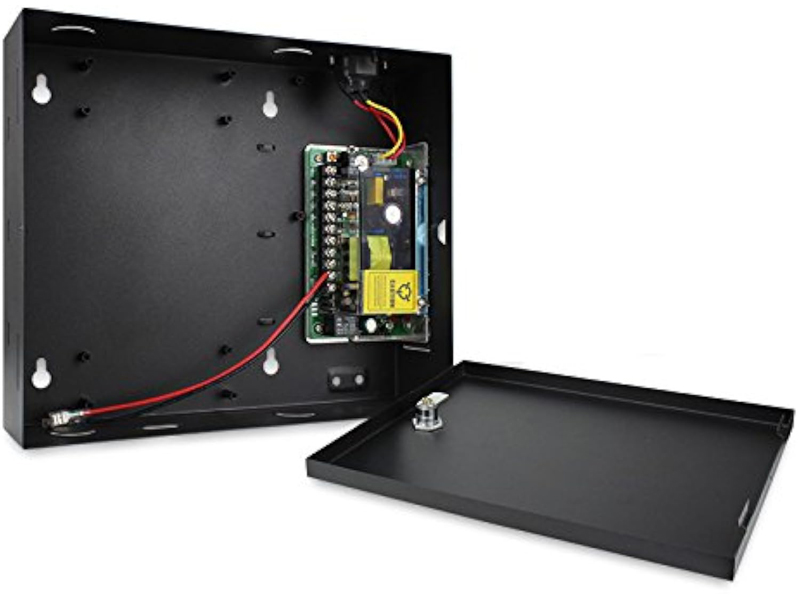
IoT requires strong signal transmission
Some IoT devices use wireless signals. Wi‑Fi and cellular signals must pass through the cabinet. Access control cabinet enclosures can block signals. This is a problem.
Stainless steel and other metals reduce signal strength. The cabinet must have openings or windows for antennas. Some designs use non‑metallic panels for the top or side. This lets wireless signals pass through. A good IoT‑ready access control cabinet enclosures considers this from the start.
IoT devices generate heat
IoT controllers and network switches produce heat. If the access control cabinet enclosures traps heat, devices fail. The cabinet must let hot air escape.
Vents are the simplest solution. They let air flow through. For more demanding systems, fans are better. They pull cool air in and push hot air out. A good cabinet has thermal management built in. This keeps devices running at safe temperatures.
IoT needs space for future expansion
Technology changes quickly. You may add more sensors later. You may upgrade controllers. The access control cabinet enclosures should have extra space. It should have empty mounting slots. It should have spare cable pathways.
This modular approach saves money. You do not need to replace the whole cabinet. You just add new parts. A flexible cabinet supports your system as it grows.
IoT requires protection against the environment
Many access control cabinets are outdoors. They face rain, dust, and sunlight. The access control cabinet enclosures must keep these out.
Look for a high IP rating. IP66 stops dust and strong water jets. IP67 allows for temporary submersion. The cabinet material must resist corrosion. Stainless steel is a good choice. Grade 304 works for most locations. Grade 316 is better for coastal areas with salt water.
IoT needs physical security
Access control systems are security systems. The access control cabinet enclosures itself must be secure. It must resist vandals and break‑ins.
A strong cabinet uses thick metal. It has reinforced hinges. It uses tamper‑proof locks. Some cabinets have sensors that detect opening. These sensors alert the system if someone tries to break in.
IoT access control cabinet enclosuress need proper sealing
Cables enter the cabinet through holes. These holes must be sealed. Cable glands are common. They clamp around the cable. They keep water and dust out. They also prevent cables from being pulled loose.
Some cabinets use grommets or compression fittings. These work well too. The important thing is that every entry point is sealed.
Manufacturing quality affects IoT support
A access control cabinet enclosures that supports IoT must be built with care. Welds must be strong. Seals must be tight. Holes must be in the right places. Poor manufacturing leads to leaks, shorts, and failures.
Precision matters. The manufacturer must follow your drawings exactly. They must use quality materials. They must test the access control cabinet enclosures before delivery.
Why Shinging Technology is the right partner
Shinging Technology Co., Ltd. has 17 years of experience in metal manufacturing. They provide complete solutions based on customer needs or professional drawings. Their capabilities include stainless steel manufacturing, metal stamping, sheet metal fabrication, electrical assembly, wiring, die‑casting, and injection molding.
This range of skills allows them to build access control cabinets that fully support IoT. They can add cable glands and entry points. They can design antenna windows. They can install fan systems. They can create modular mounting rails. Their electrical assembly and wiring expertise helps integrate power supplies and data connections seamlessly.
With Shinging Technology, you get an Access control cabinet enclosures that is ready for IoT from day one. It handles heat, protects electronics, allows signals, and leaves room for growth. Your access control system will work reliably and efficiently for years to come.
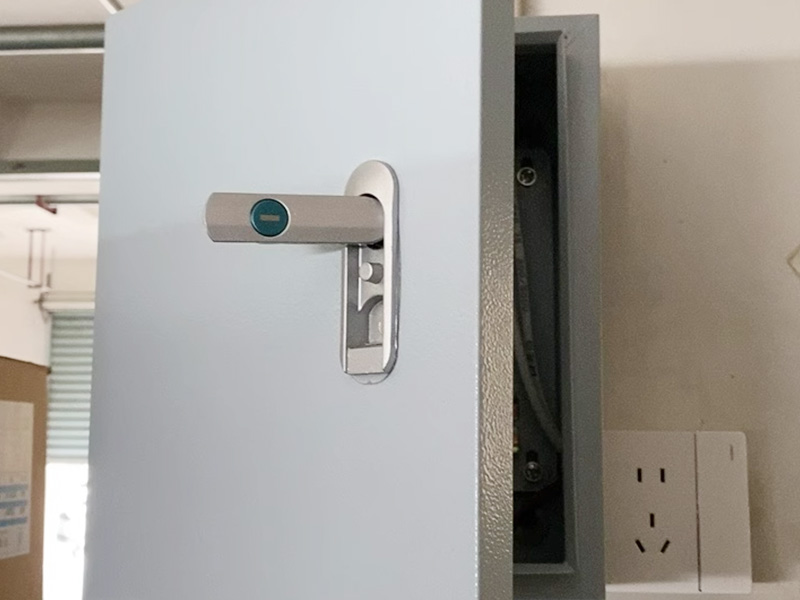
A new compliance rule is changing how buyers source metal enclosure for access control products. Starting June 30, 2026, the U.S. Department of Defens...
Sep 21,2026 / Industry news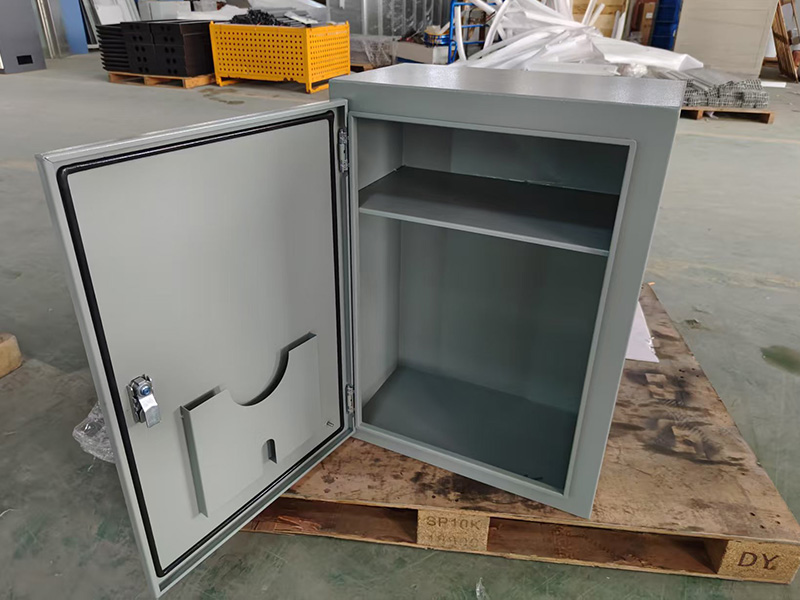
A new U.S. tariff rule is changing the game for Amazon sellers. On April 2, 2026, the White House signed a new order on steel, aluminum, and copper im...
Sep 21,2026 / Industry news
The outdoor micro data center enclosure market is growing very fast. It will grow from $1.68 billion in 2025 to $2.01 billion in 2026. That is a 20.1 ...
Sep 20,2026 / Industry newsOnline
Provider of Complete Metal Manufacturing Solutions
+86 18939857433
1188 Jiu Ye Road, Shanghai, China
11561 N Lamar Blvd,Austin,Texas,United States of America,78753
Gyeongin-ro 56-gil 8, ,3F jjbeauty,Guro-gu,Seoul,Guro-gu,Seoul,Republic of Korea
Top
Copyright © 2025 Shinging Technology Co., Ltd.,
Power By Bontop
 English
 Spanish
 Portuguese
 Arabic
 Korean
 Japanese